Futlink
We use cookies to improve your experience and analyse site traffic. By continuing to use our site, you agree to our use of cookies. Read our Privacy Policy.
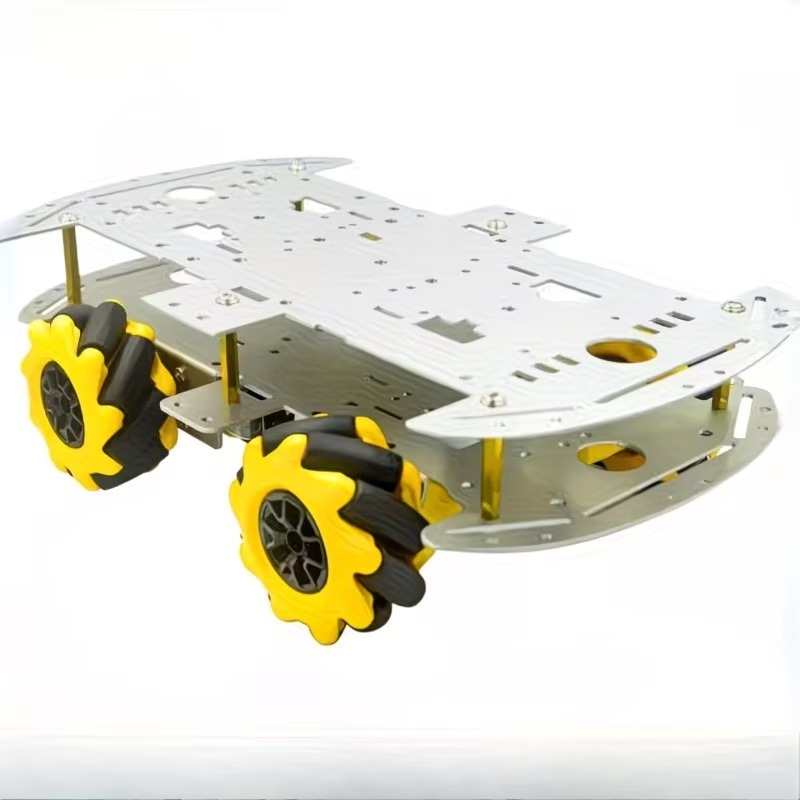
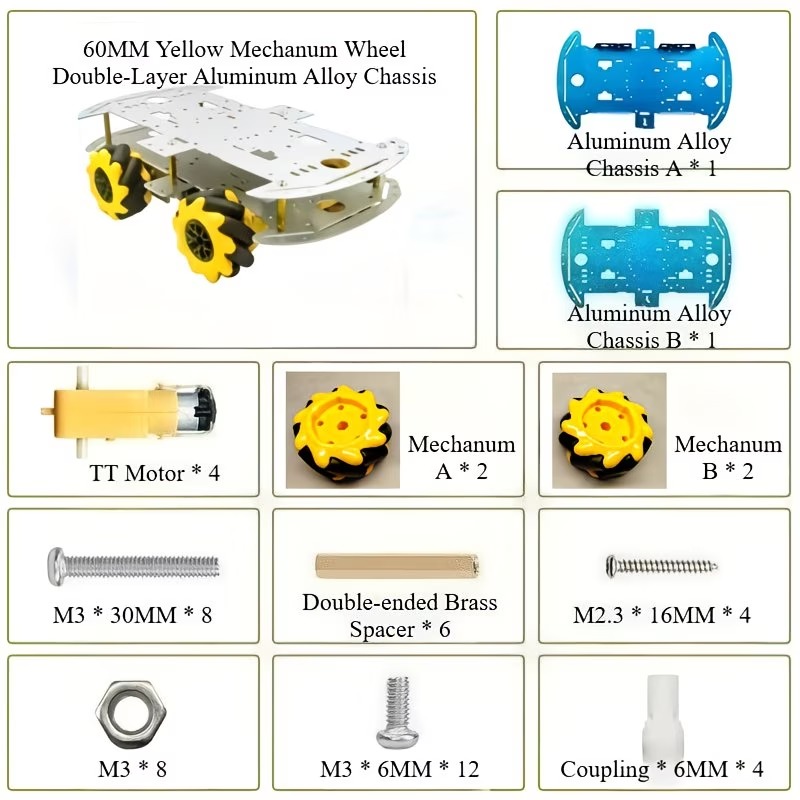
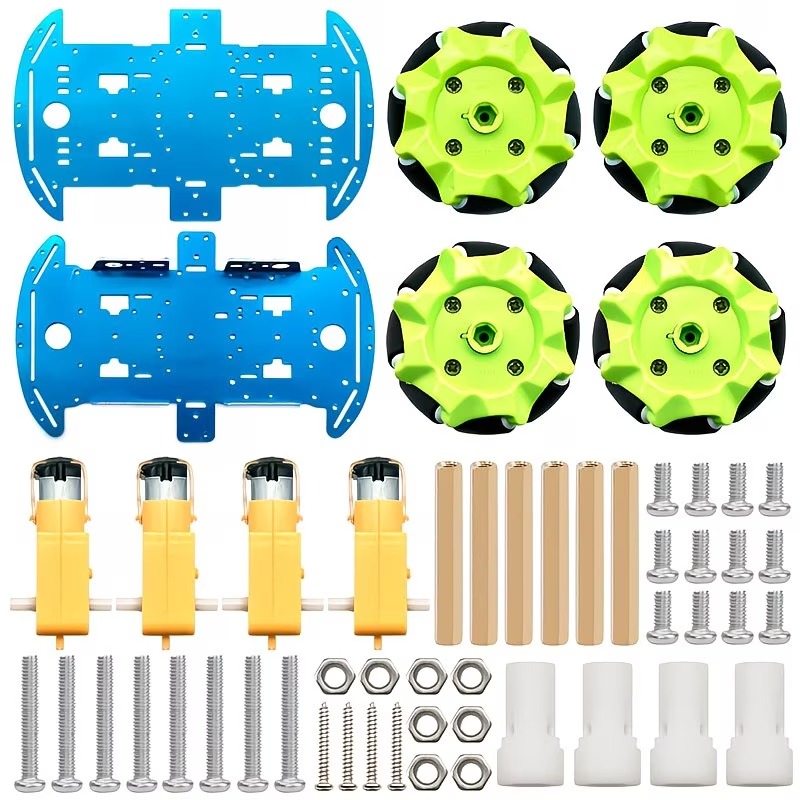
Chassis plates (2x, either aluminum alloy or acrylic)
Mecanum wheels (4x, with rubberized rollers for grip)
DC geared motors (4x, often with speed encoders for precise control)
Motor mounting brackets
Couplings to connect wheels to motors
Fastener kit (screws, nuts, standoffs)
A battery holder (batteries usually sold separately)
Omnidirectional Movement: Equipped with four Mecanum wheels, each with rollers set at a 45-degree angle, the chassis can achieve comprehensive 360-degree movement. This includes forward, backward, sideways (crab-walk), diagonal shifts, and rotation in place.
Double-Layer Design: The two-tier architecture provides ample surface area for mounting various components. The lower deck is typically used for heavy items like motors and batteries, while the upper deck is dedicated to sensitive electronics such as microcontrollers (Arduino, Raspberry Pi), sensors (LIDAR, ultrasonic), and camera modules, allowing for clean cable management and organization.
Durable Construction: Chassis are commonly made from high-strength materials like aluminum alloy or robust acrylic, ensuring a rigid, wobble-free base that can support a substantial payload, often up to 1.5 kg (or more with heavy-duty motors).
Expandability: The chassis plates feature numerous pre-drilled mounting holes and slots, making it highly compatible with a wide range of standard robotics components and development boards, facilitating easy customization and expansion for projects like obstacle avoidance, line tracking, or AI navigation.
4WD System: A four-wheel drive configuration with independent DC geared motors (often TT motors with gear ratios like 1:48 or 1:120) provides strong torque and reliable power for smooth operation on hard surfaces or thin carpets.
Similar products you may be interested in
₦42,000